A trench lighter is a small machine with a long memory. It belongs to the same family as the vintage kerosene lighter: refillable, mechanical, wind-resistant, and built around the simple promise that fire should be available when matches fail. More than a century after its wartime origins, the form still feels useful because it solves a real problem with very little excess.
The name comes from the First World War. Soldiers in the trenches needed a way to light cigarettes, pipes, stoves, and signal materials in damp, windy conditions. Matches were fragile. They got wet, snapped, burned too quickly, and demanded both hands at exactly the wrong moment. A lighter that could be refueled, sparked with a wheel, and shielded from wind was not a luxury. It was practical equipment.
Early trench lighters were often handmade or field-adapted from spent brass shell casings, scrap metal, and simple ignition parts. That improvised origin is part of their appeal. The trench lighter was never only a polished consumer object. It was a tool shaped by pressure, scarcity, and use.
How a Trench Lighter Works
Most classic trench lighters use liquid fuel, often called lighter fluid or kerosene in vintage descriptions. The fuel saturates cotton or wadding inside the body. A wick draws fuel upward, and a flint wheel throws sparks when struck. Once the spark catches the vapor at the wick, the lighter produces a steady flame.
The windproof character comes from the chimney or shield around the wick. Instead of leaving the flame fully exposed, the body protects it from side gusts while still allowing enough oxygen to feed combustion. It is a simple design, but it is effective. That is why the basic relationship between fuel reservoir, wick, flint, and wind guard has survived for generations.
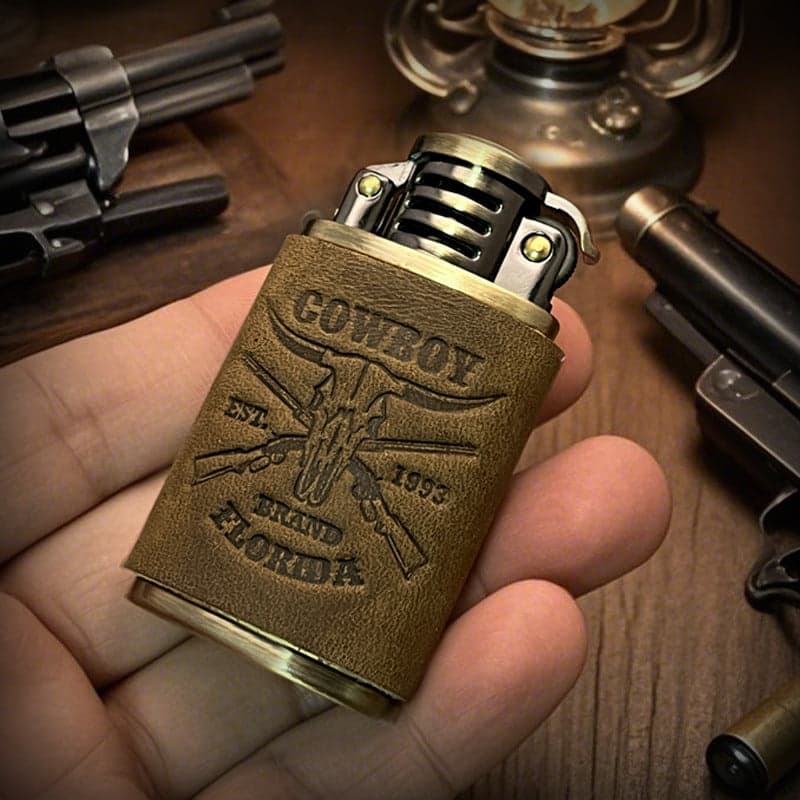
Modern examples vary in shape. Some use a hinged cap. Some use a screw-on sleeve. Some borrow from Western, military, or Art Deco design language. The Zorro 520 Western Cowboy Brass Lighter is a contemporary interpretation with solid brass construction and a leather wrap, keeping the tactile spirit of the vintage kerosene lighter while making it suitable for present-day carry.
Why Collectors Love Brass Trench Lighters
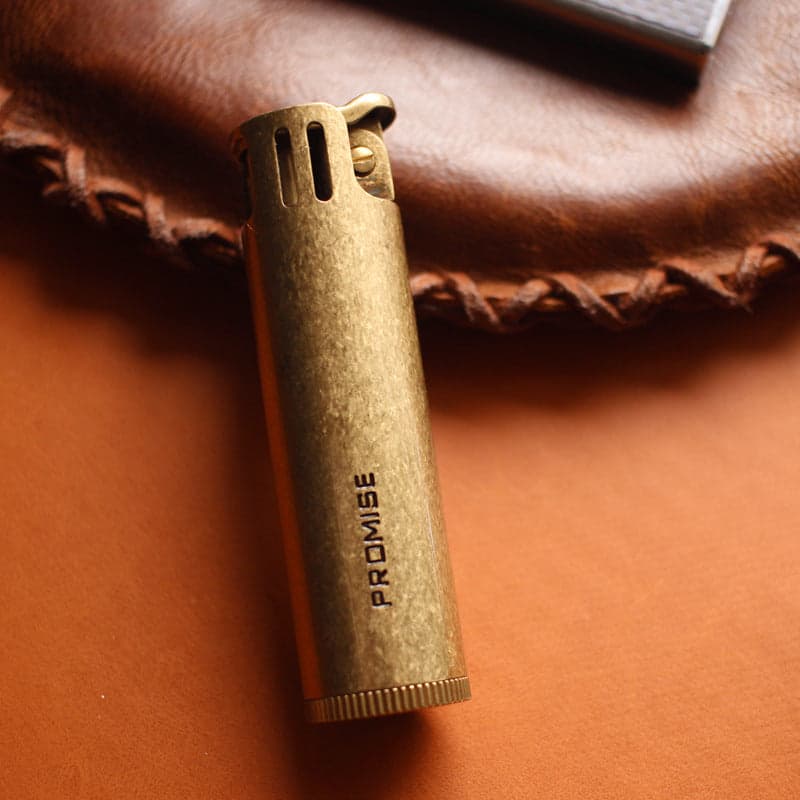
Brass is a natural material for this type of lighter. It machines well, resists corrosion better than many plain steels, and has enough density to feel dependable in the hand. It also looks right. Bright brass has a warm, almost ceremonial quality, but it does not stay precious for long. With use, it darkens into a deeper gold and brown.
Collectors are drawn to that aging. A brass trench lighter can show pocket wear, thumb marks, small scratches, and darker tones around the cap or wheel. These changes are not flaws in the usual sense. They are evidence that the object has been carried and used.
This is also why vintage kerosene lighter design continues to influence modern everyday carry. It has a visual honesty that many contemporary accessories lack. You can understand the mechanism by looking at it. You can refill it, replace the flint, trim the wick, and keep it working.
Patina and Care Basics
A brass or copper lighter will tarnish over time. Moisture, air, skin oils, and fuel residue all affect the surface. If you want a bright finish, wipe the lighter after handling and polish occasionally with a metal-safe cloth. If you prefer patina, leave it alone except for normal cleaning around the wick, cap, and fuel area.
The working parts deserve more attention than the exterior. Keep the fuel reservoir properly filled, but avoid overfilling. Replace the flint when the spark weakens. Trim the charred end of the wick when it becomes blackened or uneven. For more detailed maintenance, read our guide on how to care for your copper lighter.
A well-kept trench lighter does not need much. That is part of the design's endurance. It invites occasional maintenance rather than constant replacement.
The Modern EDC Angle
Today, most people do not need a lighter for the same reasons soldiers did in 1916. The appeal has shifted, but it has not disappeared. A trench lighter is compact, refillable, repairable, and satisfying to use. It can light a candle, a camp stove, incense, or a cigar. It can also sit in a pocket as a small reminder that some tools are better when they are mechanical.
In everyday carry culture, this matters. A good EDC object earns its space by being useful, durable, and enjoyable enough that you remember to carry it. Plastic disposable lighters are convenient, but they have no memory. A brass trench lighter develops one.
That is why the form endures. It began as an answer to wind, wet matches, and hard conditions. It remains because the answer was elegant: fuel, flint, wick, metal, and a design that respects the hand.