Every Zcopper product begins as a choice of material. That choice determines how the object will look, feel, age, and perform over its lifetime. We work primarily with three materials: copper, brass, and leather. Here is why we chose each of them.
Copper
Copper is our primary material, and the one most central to our identity. It is one of the oldest metals worked by humans — used for tools, vessels, and ornament for more than 10,000 years.
For lighters specifically, copper offers a combination of properties that no other affordable metal matches. It is thermally stable, meaning it holds and releases heat predictably. It is soft enough to be shaped and engraved by hand. And it ages in a way that enhances rather than degrades its appearance — developing rich amber, brown, and eventually green tones that tell the story of its use.
We source our copper in C110 alloy (electrolytic tough pitch copper) — the purest commercially available grade, at 99.9% copper content. The purity matters: lower-grade alloys age unevenly, developing blotchy rather than rich, deep patina.
Brass
Brass is an alloy of copper and zinc, typically 60–70% copper. It is harder than pure copper and more resistant to corrosion, making it ideal for mechanical components and objects that see heavy daily wear.
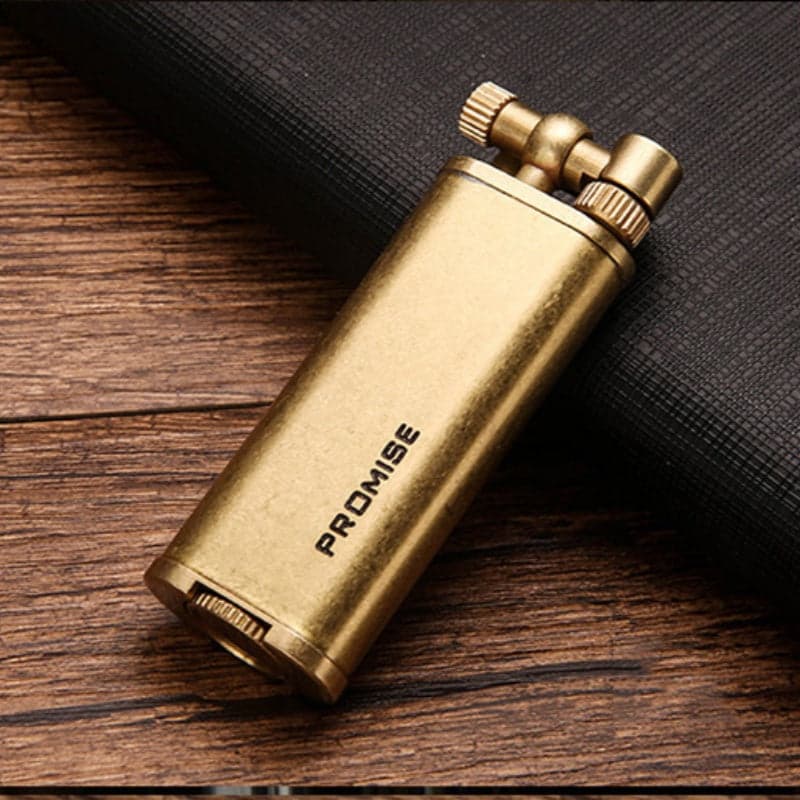
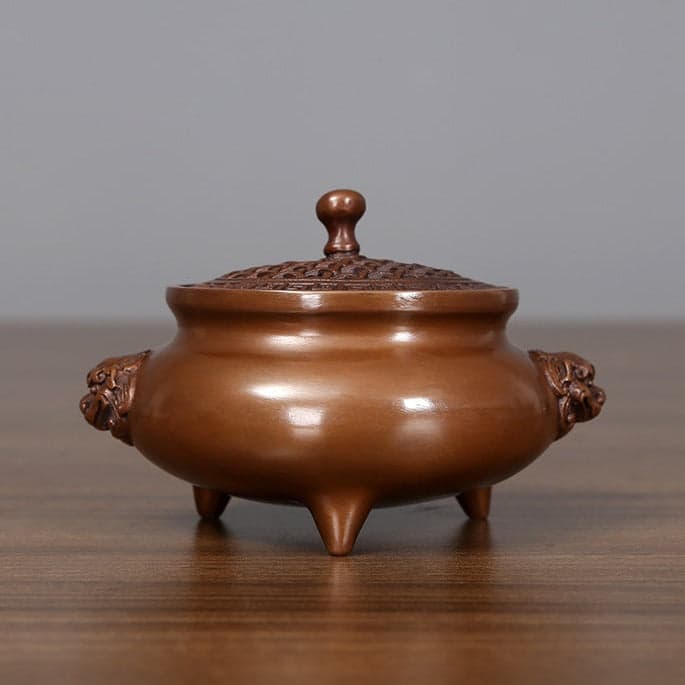
Our incense burners and some lighter casings use brass for its structural advantages. Brass also develops a patina, though more slowly and with a slightly different character — deepening to a rich gold rather than the warm amber of pure copper.
We use C260 cartridge brass, which offers the best balance of workability, durability, and finish quality.
Leather
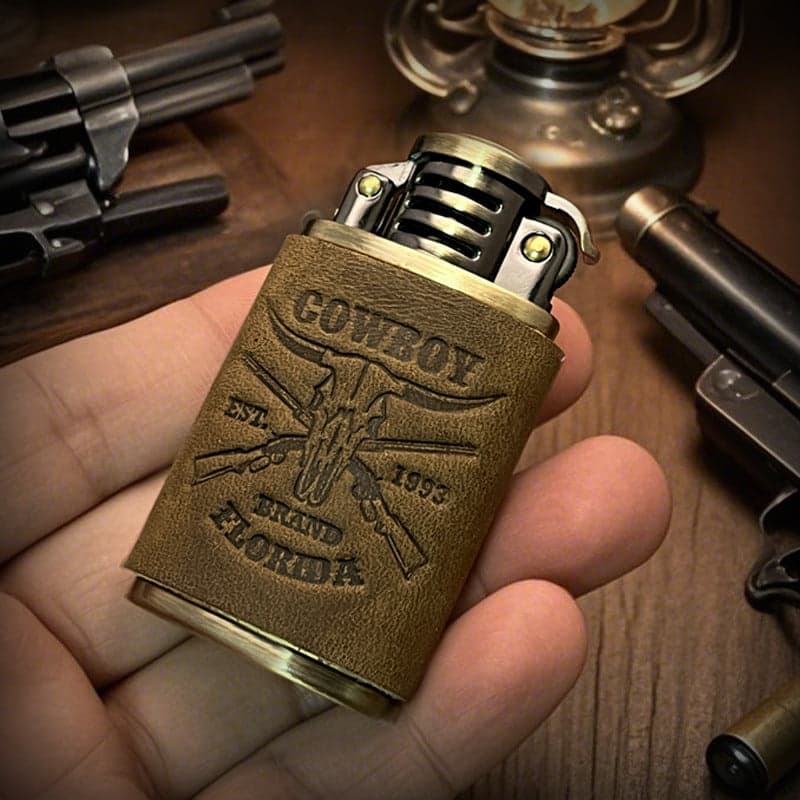
We use vegetable-tanned leather for pouches and accessories. Unlike chrome-tanned leather (which uses chemical processes and remains consistent in color and texture), vegetable-tanned leather is finished with plant tannins and develops a patina with use — darkening, softening, and molding slightly to the objects it holds.
This makes it a natural companion to copper: two materials that improve with time, that carry the marks of use as character rather than damage.
All three materials share a philosophy. They ask for a little patience and care in return for objects that will outlast anything made to be replaced.